

- 16 July 2026
- The Neuro-Concept Blog
Sedentary Behavior in Wheelchair Users: Understanding the Challenges and Taking Action to Reduce It
By Dre Murielle Grangeon, PhD, Kin, Admin.A.
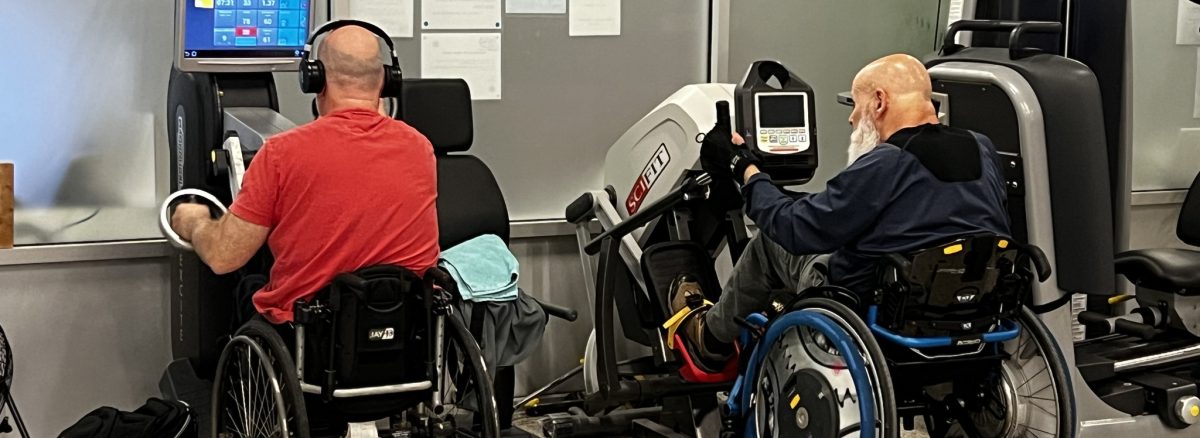
Sedentary behavior has become a major public health concern. It is defined as a set of behaviors performed while sitting or lying down during waking hours that require very low energy expenditure. For people who use a wheelchair, this issue deserves special attention, as mobility constraints may result in extended periods spent sitting and fewer opportunities for movement.
However, using a wheelchair does not necessarily mean being physically inactive. Thanks to modern approaches in adapted physical activity, assistive technologies, and guidance from specialized professionals, it is possible to significantly reduce sedentary behaviors and their impact on health.
Understanding Sedentary Behavior in Wheelchair Users
It is important to distinguish between sedentary behavior and physical inactivity. A person may participate in exercise sessions several times a week while still being highly sedentary if they spend most of their day sitting without interruption.
For wheelchair users, reduced mobility opportunities, environmental barriers, and certain functional limitations can contribute to prolonged periods of inactivity. This situation is particularly concerning because insufficient movement affects multiple physiological systems.

The Consequences of Sedentary Behavior
Cardiovascular and Metabolic Consequences
Extended periods of inactivity can lead to:
- Reduced cardiorespiratory fitness
- Increased risk of cardiovascular disease
- Greater insulin resistance
- Higher risk of type 2 diabetes
- Increased cholesterol levels and certain inflammatory markers
For individuals with spinal cord injuries, these risks are often amplified due to a significant reduction in active muscle mass.
Musculoskeletal Consequences
Sedentary behavior also contributes to:
- Loss of muscle mass
- Reduced strength and endurance
- Increased fatigue
- Decreased bone density
- Progressive physical deconditioning
This process can further limit independence in daily activities.
Psychological and Social Consequences
Lack of activity can have major effects on well-being, including:
- Lower self-esteem
- Symptoms of anxiety and depression
- Social isolation
- Reduced quality of life
Over time, these effects can become just as limiting as the physical consequences themselves.
Why Are Wheelchair Users at Greater Risk?
Physical Limitations
Depending on the underlying medical condition, some individuals may experience:
- Muscle weakness
- Chronic pain
- Significant fatigue
- Difficulties with transfers
- Cardiovascular limitations
Environmental Barriers
Insufficient accessibility remains a major obstacle:
- Inaccessible infrastructure
- Limited access to sports and recreation facilities
- Transportation challenges
- Lack of specialized equipment
Psychosocial Factors
Fear of injury, lack of confidence, limited social support, and lack of awareness about exercise opportunities can also contribute to maintaining sedentary habits.
The Benefits of a More Active Lifestyle
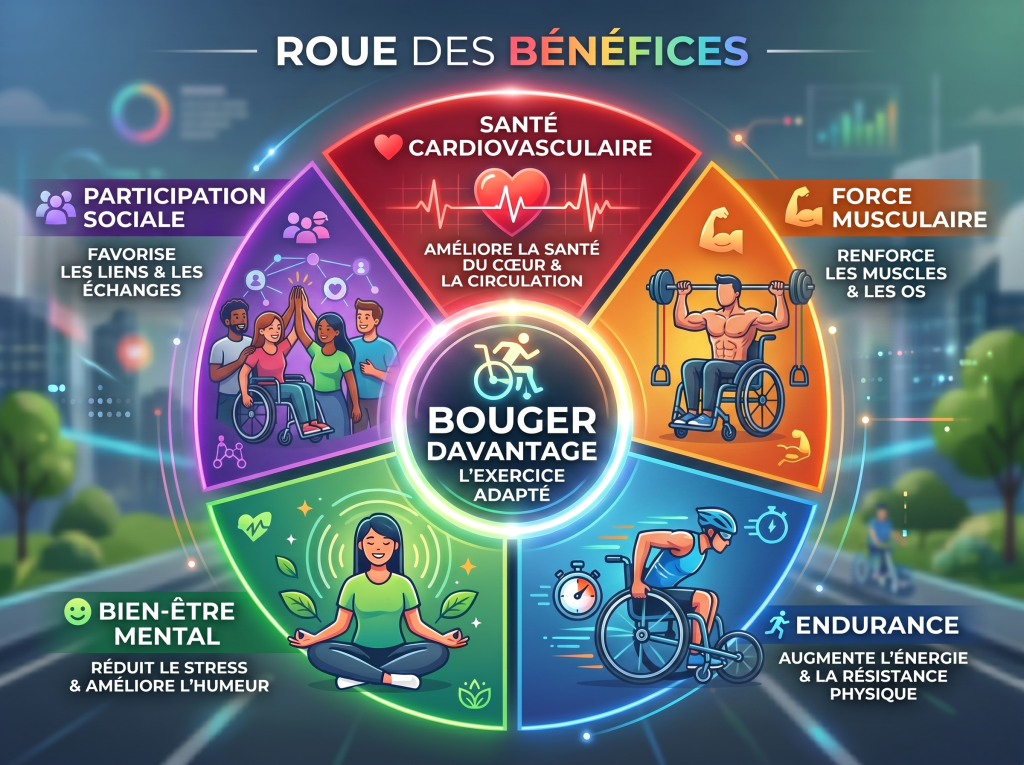
Physical Benefits
- Improved cardiovascular fitness
- Better weight management
- Increased muscle strength
- Reduced cardiometabolic risk
- Less physical deconditioning
Functional Benefits
- Greater independence
- Improved wheelchair mobility
- Better transfer capabilities
- Increased participation in activities of daily living
Psychological Benefits
- Improved mood
- Reduced anxiety
- Increased self-esteem
- Better quality of life
How Can Sedentary Behavior Be Reduced?
Break Up Periods of Inactivity Regularly
Even brief interruptions can provide meaningful health benefits.
It is recommended to:
- Change positions regularly
- Perform a few minutes of active wheelchair propulsion
- Carry out arm and trunk mobility exercises
- Engage in functional mobility activities whenever possible
Each interruption of sedentary behavior helps stimulate blood circulation and muscular activity.
Incorporate More Movement into Daily Life
Everyday activities can provide excellent opportunities to move:
- Community mobility
- Shopping and errands
- Adapted household tasks
- Recreational activities
- Social participation
The accumulation of these movements can generate meaningful health benefits.
Participate in Adapted Physical Activity
Cardiovascular Activities
- Active wheelchair propulsion
- Handcycling
- Adapted swimming
- Wheelchair basketball
- Wheelchair rugby
- Adapted dance, among others
Strength Training Exercises
- Resistance bands
- Free weights
- Cable and pulley systems
- Adapted functional exercises
- Supervised fitness programs in accessible training facilities
New Technologies for Reducing Sedentary Behavior
Digital Monitoring Tools
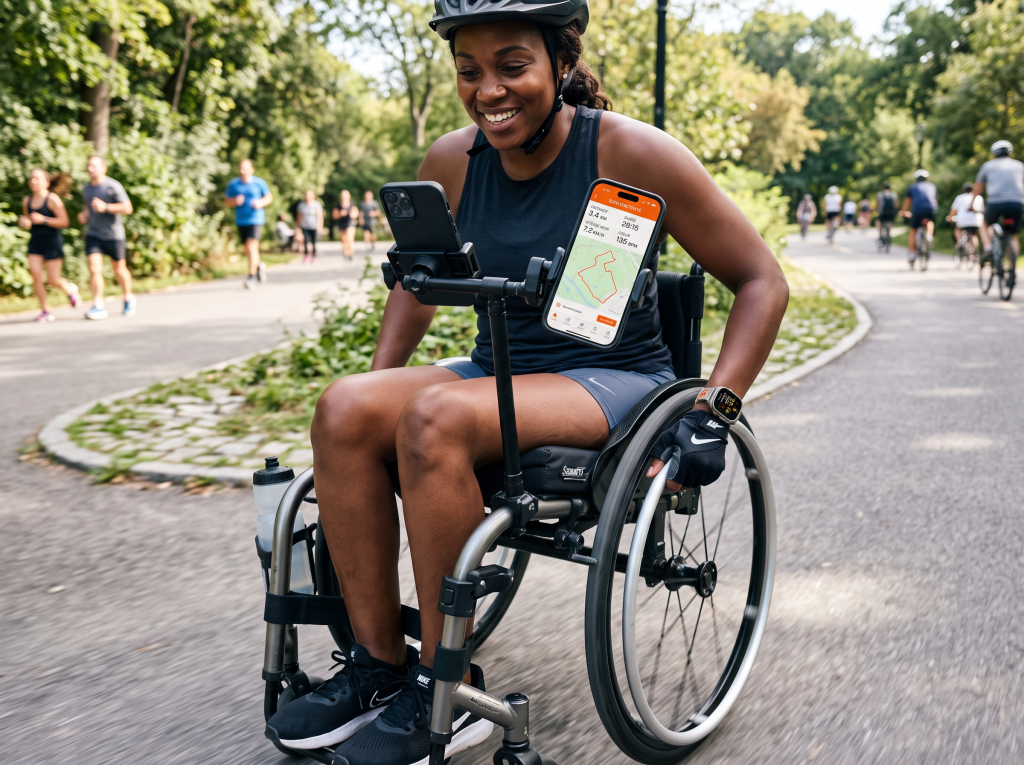
Smartwatches, mobile applications, and activity sensors can:
- Measure sedentary time
- Provide movement reminders
- Set personalized goals
- Promote self-management of physical fitness
These tools support the adoption of more active behaviors throughout the day.
- Robotic exoskeletons
- Robotic gait-training systems
- Robotic devices for upper-limb rehabilitation
- Assisted training platforms
Functional Electrical Stimulation (FES): A Powerful Tool Against Sedentary Behavior
FES involves using electrical impulses to trigger muscle contractions when voluntary activation is impossible or insufficient.
Over the past several years, FES has emerged as one of the most promising interventions for combating the consequences of sedentary behavior in individuals with paralysis or neurological impairments.
Its key benefits include:
- Activation of a large amount of muscle mass
- Increased energy expenditure
- Improved cardiovascular fitness
- Preservation of muscle mass
- Reduced metabolic complications
- Enhanced blood circulation
FES can be integrated into various forms of activity:
- FES-assisted cycling (FES bike)
- FES-assisted rowing
- Assisted cardiovascular training
- Muscle strengthening programs
- Stimulation-assisted and robotic-assisted walking
The Essential Role of the Specialized Kinesiologist
Combating sedentary behavior requires much more than simply encouraging people to “move more.” It demands comprehensive assessment, individualized exercise prescription, and safe professional supervision.
A kinesiologist specialized in adapted physical activity, rehabilitation, or neurorehabilitation plays a central role in this process.

As such, kinesiologists are key members of modern interdisciplinary rehabilitation teams.
Conclusion
References
- American College of Sports Medicine. (2021). ACSM’s guidelines for exercise testing and prescription (11e éd.). Wolters Kluwer.
- Buchholz, A. C., McGillivray, C. F., & Pencharz, P. B. (2003). Physical activity levels are low in free-living adults with chronic paraplegia. Obesity Research, 11(4), 563-570. https://doi.org/10.1038/oby.2003.81
- Dolbow, D. R., Gorgey, A. S., Ketchum, J. M., Moore, J. R., Hackett, L. A., & Gater, D. R. (2017). Exercise adherence during home-based functional electrical stimulation cycling by individuals with spinal cord injury. American Journal of Physical Medicine & Rehabilitation, 96(8), 575-581. https://doi.org/10.1097/PHM.0000000000000688
- Esquenazi, A., Talaty, M., Packel, A., & Saulino, M. (2012). The ReWalk powered exoskeleton to restore ambulatory function to individuals with thoracic-level motor-complete spinal cord injury. American Journal of Physical Medicine & Rehabilitation, 91(11), 911-921. https://doi.org/10.1097/PHM.0b013e318269d9a3
- Farkas, G. J., Pitot, M. A., Berg, A. S., & Gater, D. R. (2021). Benefits of functional electrical stimulation cycling in people with spinal cord injury: A systematic review. Topics in Spinal Cord Injury Rehabilitation, 27(2), 89-109. https://doi.org/10.46292/sci2702-89
- Gouvernement du Québec. (2024). Statistiques sur les personnes handicapées au Québec. Québec. https://www.quebec.ca/famille-et-soutien-aux-personnes/participation-sociale-personnes-handicapees/statistiques
- Hasnan, N., Engkasan, J. P., et al. (2013). Functional electrical stimulation cycling and health outcomes in spinal cord injury: A systematic review. Journal of Rehabilitation Medicine, 45(6), 509-517. https://doi.org/10.2340/16501977-1142
- Institut national de santé publique du Québec. (2025). Activité physique dans la population québécoise. Gouvernement du Québec. https://www.inspq.qc.ca/indicateur/habitudes-de-vie/activite-physique
- Krueger, H., Noonan, V. K., Trenaman, L. M., Joshi, P., & Rivers, C. S. (2013). The economic burden of traumatic spinal cord injury in Canada. Chronic Diseases and Injuries in Canada, 33(3), 113-122.
- Latimer-Cheung, A. E., Martin Ginis, K. A., Hicks, A. L., Motl, R. W., Pilutti, L. A., Duggan, M., Wheeler, G., Persad, R., & Smith, K. M. (2016). Development of evidence-informed physical activity guidelines for adults with spinal cord injury. Spinal Cord, 54(11), 908-923. https://doi.org/10.1038/sc.2016.79
- Louie, D. R., & Eng, J. J. (2016). Powered robotic exoskeletons in post-stroke rehabilitation and spinal cord injury rehabilitation. PM&R, 8(9 Suppl.), S174-S179. https://doi.org/10.1016/j.pmrj.2016.07.534
- Martin Ginis, K. A., Jörgensen, S., & Stapleton, J. (2012). Exercise and sport for persons with spinal cord injury. PM&R, 4(11), 894-900. https://doi.org/10.1016/j.pmrj.2012.08.013
- Martin Ginis, K. A., van der Scheer, J. W., Latimer-Cheung, A. E., Barrow, A., Bourne, C., Carruthers, P., Bernardi, M., Ditor, D., Hicks, A. L., Leicht, C. A., Manns, P., McBride, C. B., Noonan, V. K., Pelletier, C., Smith, K., Taylor, A., & Warburton, D. E. R. (2018). Evidence-based scientific exercise guidelines for adults with spinal cord injury: An update and a new guideline. Spinal Cord, 56(4), 308-321. https://doi.org/10.1038/s41393-017-0017-3
- Morawietz, C., & Moffat, F. (2013). Effects of locomotor training after incomplete spinal cord injury: A systematic review. Archives of Physical Medicine and Rehabilitation, 94(11), 2297-2308. https://doi.org/10.1016/j.apmr.2013.06.023
- ParticipACTION. (2025). Key statistics: Physical activity and sedentary behaviour in Canada. ParticipACTION. https://www.participaction.com/the-science/key-facts-and-stats/
- Ross, R., Chaput, J.-P., Giangregorio, L. M., Janssen, I., Saunders, T. J., Kho, M. E., Poitras, V. J., et al. (2020). Canadian 24-hour movement guidelines for adults aged 18-64 years and adults aged 65 years or older: An integration of physical activity, sedentary behaviour, and sleep. Applied Physiology, Nutrition, and Metabolism, 45(10 Suppl. 2), S57-S102. https://doi.org/10.1139/apnm-2020-0467
- Statistique Canada. (2024). Mobility disabilities, 2022 (No 11-627-M). Gouvernement du Canada. https://www150.statcan.gc.ca
- Tremblay, M. S., Aubert, S., Barnes, J. D., Saunders, T. J., Carson, V., Latimer-Cheung, A. E., Chastin, S. F. M., Altenburg, T. M., & Chinapaw, M. J. M. (2017). Sedentary Behavior Research Network (SBRN): Terminology consensus project process and outcome. International Journal of Behavioral Nutrition and Physical Activity, 14(75). https://doi.org/10.1186/s12966-017-0525-8