

- 7 October 2026
- The Neuro-Concept Blog
The Greatest Risk in Neurological Rehabilitation? Predictions Made with Too Much Certainty.
By Dr. Murielle Grangeon, PhD, Kin, Adm.A.
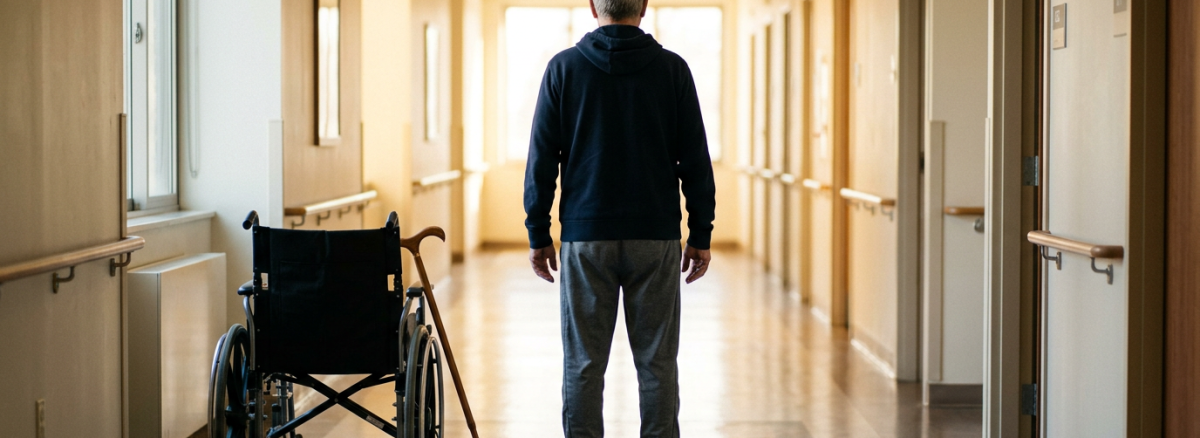
Some of the most life-changing words a person will ever hear are spoken in a hospital room, just days after a stroke, spinal cord injury, traumatic brain injury, or the diagnosis of a neurological condition.
“You’ll never walk again.”
“That arm is dead.”
“You’ve reached a plateau.”
For many people, these words linger for years. They shape decisions, influence engagement in rehabilitation, and sometimes even determine how they see their future.
Yet an uncomfortable question remains: Can we really predict, with that degree of certainty, how much recovery any one person will achieve after a neurological injury?
The Difference Between Honesty and Fatalism
Let us be clear: healthcare professionals have a responsibility to be honest. They should not promise a full recovery when the evidence does not support such a prediction. They must explain the severity of an injury, the challenges ahead, and the possibility of permanent impairments.
That is not pessimism. It is good clinical practice. The problem arises when probabilities are mistaken for certainties.
Neurological recovery varies enormously from one person to another. Even when the odds seem unfavorable, statistics cannot always tell us with precision what a specific individual will be capable of six months, two years, or ten years down the road.
Yet words such as never, impossible, and definitely are still sometimes used, even when they go beyond what science can confidently support. A probable outcome is not the same thing as a certain one. And when we are talking about someone’s future, that distinction matters.
Science Has Moved Forward. Some Narratives Have Not.
For many years, neurological recovery was believed to occur primarily within a relatively short window after injury. Once that window had closed, meaningful improvement was thought to be unlikely.
Research on neuroplasticity has fundamentally changed that view. We now know that the brain and nervous system retain the capacity to adapt throughout life. New neural connections can form, existing pathways can strengthen, and meaningful recovery and learning can continue long after a neurological injury.
Research on neuroplasticity has shown that the nervous system responds to repetition, intensity, task-specific training, and active participation. In other words, the brain continues to change when it is given meaningful opportunities to do so.
This does not mean that anything is possible. It means that a person’s true limits are often far more difficult to define than we once believed. Many individuals continue to improve their balance, endurance, functional independence, dexterity, and mobility well beyond the timeframes traditionally associated with recovery.
What Seems Impossible Today May Not Be Impossible Tomorrow
There is another reason to be cautious when making definitive predictions: science itself keeps evolving.
The history of medicine is filled with examples of yesterday’s impossibilities becoming today’s realities. Just a few decades ago, many technologies now used in neurological rehabilitation were considered experimental or unrealistic. Functional electrical stimulation, robotic gait-training systems, brain-computer interfaces, neuromodulation, non-invasive stimulation technologies, and immersive rehabilitation tools have gradually expanded rehabilitation possibilities for many individuals.
In spinal cord injury rehabilitation, recent studies have even shown that certain motor and walking functions once thought unattainable may, in some cases, improve through the combination of intensive training and nervous system stimulation.
No one knows exactly what innovations will be available in five, ten, or twenty years. This is not an argument for promising future breakthroughs. No one can guarantee that a new technology will restore a lost function for a particular individual.
However, when someone is told they will never walk again or never recover a specific function, two predictions are being made at the same time: one about the patient and another about the future of science.
History repeatedly reminds us to be cautious about both. Humility remains an essential virtue, not only when considering human potential, but also when acknowledging the limits of our current knowledge.
The Risk of Self-Fulfilling Prophecies
Imagine two people with similar neurological injuries.
The first is told: “The odds may be low, but we don’t know exactly what you’re capable of achieving yet. Let’s keep working.”
The second is told: “This probably isn’t going to change anything.”
Who is more likely to continue exercising, commit to an intensive rehabilitation program, or keep searching for solutions when progress slows?
Expectations influence behavior. When people become convinced that the outcome has already been decided, they are often less likely to invest effort, participate actively in treatment, or persevere through setbacks.
Motivation and self-efficacy, the belief that one’s actions can influence outcomes, are now recognized as important contributors to neurological rehabilitation. People who believe improvement remains possible tend to stay more engaged, practice more consistently, and persist longer when challenges arise.
Hope does not heal a neurological injury. But the absence of hope can certainly reduce the opportunities to realize whatever potential remains.
When Patients Exceed Expectations
In clinical practice, stories such as these are not uncommon:
“They told me I would never walk again, and today I walk with a cane.”
“They told me my arm would never be useful again, but now I can cook.”
“They told me I would never return to work.”
Of course, not every story ends this way. Some predictions prove accurate. Some impairments remain permanent despite every effort. Yet the simple fact that patients regularly exceed expectations should make us cautious whenever we are tempted to declare that recovery is impossible.
The history of neurological rehabilitation is filled with exceptions. Enough exceptions to remind us that human beings do not always follow statistical curves. Statistics are extremely useful for understanding what happens within a population. They are far less effective when it comes to predicting the future of an individual with certainty.
Why Do Some Professionals Sound So Pessimistic?
Most healthcare professionals do not intend to discourage their patients.
Nevertheless, several factors may contribute to more pessimistic messaging:
- A desire to avoid creating false hope;
- Training received when knowledge of neuroplasticity was more limited;
- Frequent exposure to severe clinical cases;
- Health systems operating under significant resource constraints;
- The need to prepare patients for difficult realities;
- A desire to protect families from potential disappointment.
These concerns are often rooted in genuine compassion and professional responsibility. However, the line between realism and fatalism can sometimes become very thin. Modern theories of motivation suggest that engagement depends in part on a person’s sense of competence, autonomy, and the support they receive.
When patients feel that their future has already been written or that their efforts are meaningless, these foundations can be weakened. In other words, the way we speak to people can itself influence how actively they participate in rehabilitation.
Nobody Truly Knows Your Full Potential
One of the most difficult realities in neurology is that no professional can accurately predict an individual’s future.
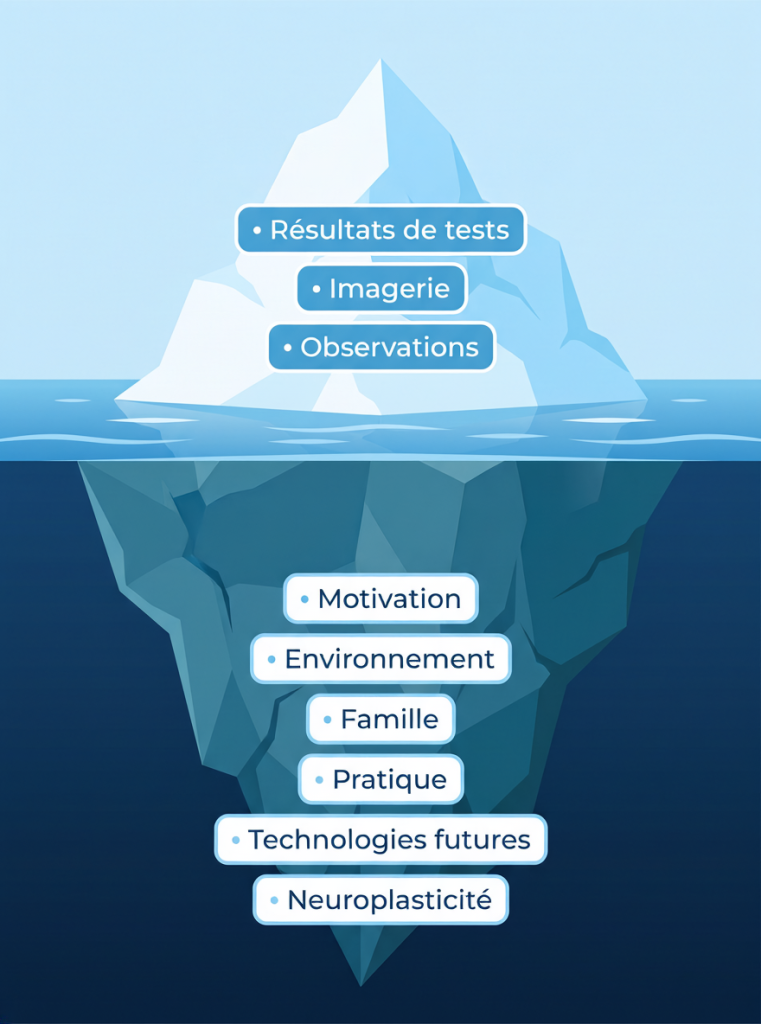
Imaging studies, clinical evaluations, and prognostic tools provide valuable information. They help estimate probabilities.
But recovery is also influenced by factors that are far more difficult to measure, including motivation, family support, mental health, the rehabilitation environment, opportunities for practice, the quality of interventions, and the intensity of effort sustained over time.
Recent research suggests that motivation in neurological rehabilitation is shaped by a complex interaction of personal, emotional, social, and environmental factors.
Brain scans, clinical assessments, and statistics tell part of the story, but never the whole story.
Human potential is far more complex than an MRI image or an early assessment score.
A More Constructive Approach
Perhaps we should replace definitive statements with a greater degree of clinical humility.
Instead of saying: “You’ll never walk again.”
We might say: “Recovery is likely to be challenging. I can’t promise that you’ll walk again, but we can work together to help you achieve the highest level of independence possible.”
Instead of saying: “You’ve reached your maximum potential.”
We might say: “We’re seeing limited progress at the moment. Let’s explore whether there are other options worth considering.”
This approach does not create false hope. It simply acknowledges what science has taught us: limits exist, but they are often more difficult to identify than we once believed. Most importantly, it preserves something essential to rehabilitation: the individual’s active engagement in the process.
Hope Is Not the Opposite of Realism
Hope and realism are often presented as opposites, as though we must choose one or the other.
In reality, the best clinicians embrace both.
They acknowledge obstacles, explain the evidence, discuss risks, and prepare patients for the challenges ahead.
But they also avoid declaring limits that no one can define with absolute certainty.
Hope is not the belief that a miracle is guaranteed.
Hope is not the belief that anything is possible. It is the recognition that we should be careful before deciding what is impossible.
In Summary
In neurological rehabilitation, words carry enormous weight. Predictions delivered too early or with too much certainty can stay with a person for years. Conversely, honest, nuanced, and possibility-oriented communication can support the commitment needed to keep moving forward despite uncertainty.
Recent research reminds us that recovery depends on more than the neurological injury itself. It is also influenced by motivation, perceived self-efficacy, the rehabilitation environment, and active participation in the recovery process.
Modern neuroscience has shown us that the brain often possesses a greater capacity for adaptation than once believed. It has also shown us that rehabilitation continues to evolve. Advances in neuroscience, neuromodulation, electrical stimulation, robotics, brain-computer interfaces, and other emerging technologies continue to push the boundaries of what seemed impossible only a few years ago.
No one benefits from false hope. But neither do we benefit from prematurely deciding that there is nothing left to try. Perhaps the real question is not whether we should be optimistic or realistic. Perhaps we simply need enough humility to acknowledge two realities. First, we do not always know how far a person can go. Second, we do not know how far science will take us tomorrow.
As long as we cannot fully define either human potential or the future of science, hope still has a rightful place in neurological rehabilitation.
References
- Cramer, S. C., Sur, M., Dobkin, B. H., O’Brien, C., Sanger, T. D., Trojanowski, J. Q., et al. (2011). Harnessing neuroplasticity for clinical applications. Brain, 134(6), 1591-1609.
- Fan, X., Xia, Y., Wu, J., Jia, S., & Hu, J. (2025). Influencing factors related to stroke patients’ rehabilitation motivation: A scoping review. Frontiers in Neurology, 16.
- Gangwani, R., Cain, A., Collins, A., & Cassidy, J. M. (2022). Leveraging factors of self-efficacy and motivation to optimize stroke recovery. Frontiers in Neurology, 13, 823202.
- Kleim, J. A., & Jones, T. A. (2008). Principles of experience-dependent neural plasticity: Implications for rehabilitation after brain damage. Journal of Speech, Language, and Hearing Research, 51(1), S225-S239.
- Langhorne, P., Bernhardt, J., & Kwakkel, G. (2011). Stroke rehabilitation. The Lancet, 377(9778), 1693-1702.
- Verrienti, G., Raccagni, C., Lombardozzi, G., De Bartolo, D., & Iosa, M. (2023). Motivation as a measurable outcome in stroke rehabilitation: A systematic review of the literature. International Journal of Environmental Research and Public Health, 20(5), 4187.