


- 23 September 2026
- The Neuro-Concept Blog
5 Neurological Rehabilitation Myths That May Be Holding Back Your Recovery
By Dre Murielle Grangeon, PhD, Kin, Admin.A.
When someone is diagnosed with a neurological condition such as a stroke, spinal cord injury, traumatic brain injury, or progressive neurological disease, they are often overwhelmed with information. Unfortunately, not all of that information is accurate. Some long-standing beliefs about recovery can unintentionally discourage people from pursuing rehabilitation or striving for further progress.
The good news is that our understanding of neurological recovery has evolved significantly over the past few decades. Advances in neuroscience continue to challenge many of the assumptions that once shaped rehabilitation.
Let’s take a closer look at five common neurorehabilitation myths and what the science actually tells us.
Myth #1: Recovery Stops After the First Few Months
This is perhaps the most common misconception in neurological rehabilitation.
While recovery is often fastest during the first few months after a neurological injury, this does not mean that progress comes to a complete stop afterward.
The brain and nervous system have an extraordinary ability to adapt and reorganize themselves, a phenomenon known as neuroplasticity. Through repetition, practice, and meaningful experiences, the nervous system can continue forming and strengthening new neural connections long after the initial injury.
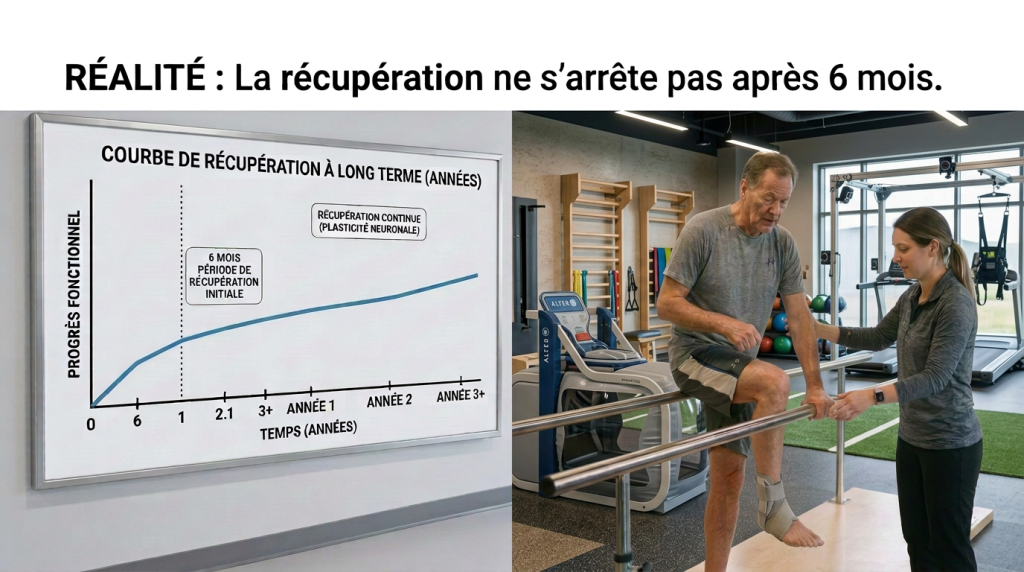
In fact, many individuals continue to improve their mobility, balance, endurance, strength, and functional abilities years after their diagnosis when they participate in targeted and intensive rehabilitation programs.
Progress may become slower over time, but recovery does not necessarily have an expiration date.
Myth #2: Rehabilitation Is Only About Learning to Walk Again
Walking is often an important rehabilitation goal, but it is only one piece of the puzzle.
The ultimate purpose of rehabilitation is to help people regain as much independence and participation in daily life as possible.
Depending on the individual’s needs and priorities, rehabilitation goals may include:
- Improving balance and stability
- Regaining arm and hand function
- Reducing fatigue
- Returning to sports or recreational activities
- Going back to work
- Driving again
- Participating more fully in family and social activities
Success is not defined solely by how far someone can walk. More importantly, it is measured by their ability to return to the activities that matter most to them and enhance their quality of life.
Myth #3: If a Function Hasn't Returned Quickly, It Never Will
Many people are told that if a movement or function has not returned within a few weeks or months, it is gone forever.
The reality is far more complex.
Although some impairments may persist long term, the absence of early recovery does not reliably predict what may be possible in the future. Every person’s recovery journey is unique.
Modern rehabilitation approaches combine task-specific training, intensive practice, advanced technologies, and high repetitions to promote continued improvement. As a result, some individuals regain abilities that were once thought to be permanently lost.
Even when full recovery is not achievable, meaningful improvements in function are often possible. In many cases, individuals can also learn effective strategies that increase independence and improve day-to-day performance.
Myth #4: The More I Rest, the Better I'll Recover
Rest is essential, especially during the early stages of certain neurological conditions. However, once a person’s condition has stabilized, rest alone is not enough to drive recovery.
Just as muscles become stronger through exercise, the nervous system requires stimulation and practice to adapt.
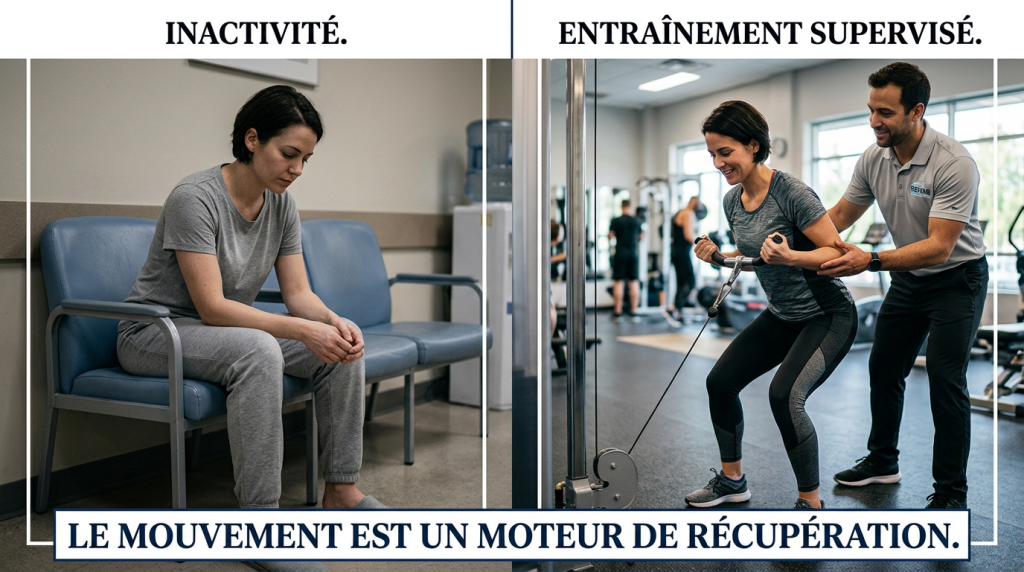
Modern neurorehabilitation is built on several key principles:
- Repetition
- Intensity
- Task-specific training
- Progressive challenge
- Practice of meaningful activities
Simply put, the brain learns by doing.
Of course, rehabilitation programs must be tailored to each individual’s abilities, health status, and level of fatigue. However, active participation is generally one of the most powerful drivers of neurological change.
Myth #5: Technology Does the Work for the Patient
Innovative technologies such as exoskeletons, functional electrical stimulation (FES), virtual reality systems, and robotic devices are generating tremendous excitement in the field of rehabilitation.
Because these technologies can appear highly sophisticated, some people assume that recovery happens automatically once the equipment is turned on.
In reality, technology is a tool, not a substitute for effort.
Its role is to increase the number of repetitions, improve movement quality, provide real-time feedback, and make certain activities possible that might otherwise be difficult to practice.
The best outcomes occur when technology is integrated into a personalized rehabilitation program with clear goals, clinical guidance, and active patient engagement.
Technology can enhance recovery, but it is not a miracle cure.
The Bottom Line
Neurological recovery is often more complex and far more hopeful than many people realize.
Even when progress appears slow, the nervous system retains an impressive capacity to adapt. With the right interventions, sufficient practice, and meaningful goals, individuals can continue making gains long after the period traditionally considered the “window of recovery.”
As our understanding of neuroplasticity continues to evolve, one thing becomes increasingly clear: rehabilitation should focus less on perceived limitations and more on each person’s potential for improvement.
In rehabilitation centres, as Neuro-Concept, we believe that evidence-based rehabilitation, intensive training, and the thoughtful use of advanced technologies can help individuals living with neurological conditions achieve meaningful progress and reach goals they may once have thought impossible.
References
- Aderinto N, AbdulBasit MO, Olatunji G, Adejumo T. Exploring the Transformative Influence of Neuroplasticity on Stroke Rehabilitation. Ann Med Surg. 2023. [pubmed.ncb…lm.nih.gov]
- National Clinical Guideline for Stroke. Royal College of Physicians, 2023. [strokeguideline.org]
- NICE Guideline NG236. Stroke Rehabilitation in Adults, 2023. [nice.org.uk]
- Tang E, Moran N, Cadman M, et al. Stroke Rehabilitation in Adults: Summary of Updated NICE Guidance. BMJ, 2024. [bmj.com]
- Boyne P, Billinger SA, Reisman D, et al. Optimal Intensity and Duration of Walking Rehabilitation in Patients With Chronic Stroke. JAMA Neurology, 2023. [pubmed.ncb…lm.nih.gov], [jamanetwork.com]
- American Heart Association/American Stroke Association. 2026 Guideline for Adult Stroke Rehabilitation and Recovery. [pubmed.ncb…lm.nih.gov], [ahajournals.org]
- Khan MA, Fares H, Ghayvat H, et al. FES-Based Rehabilitation Systems for Post-Stroke Recovery. Frontiers in Neurology, 2023. [frontiersin.org]
- Evaluating Therapeutic Effects of Exoskeletons and FES in SCI Rehabilitation. Spinal Cord, 2025. [nature.com]