


- 13 November 2026
- The Neuro-Concept Blog
Vitamin D: A Small Nutrient with a Big Impact on Mobility
By Dre MUrielle Grangeon, PhD, Kin, A. Admin
When winter arrives in Quebec, daylight hours become shorter, temperatures drop, and outdoor activities naturally decline. While these seasonal changes are part of life in a northern climate, they can also affect our health in ways that are often overlooked, including our ability to produce vitamin D.
Most people associate vitamin D with bone health, but its role extends far beyond strong bones. Vitamin D contributes to calcium absorption, muscle function, immune health, and neuromuscular performance. For individuals living with neurological conditions, maintaining adequate vitamin D levels may also support mobility, balance, and overall independence.
Why Is Vitamin D Important?
Vitamin D plays a critical role in several essential bodily functions. It helps the body absorb calcium and phosphorus, two minerals that are necessary for maintaining healthy bones. It also contributes to muscle strength and neuromuscular function, both of which are important for balance, movement, and daily activities.
Low vitamin D levels have been associated with:
- Reduced muscle strength
- Loss of bone density
- Increased risk of osteoporosis
- Higher risk of falls and fractures
- Slower physical recovery
These consequences can have a significant impact on quality of life, particularly for individuals who already face mobility challenges.
Quebec Winters and Vitamin D: A Perfect Storm
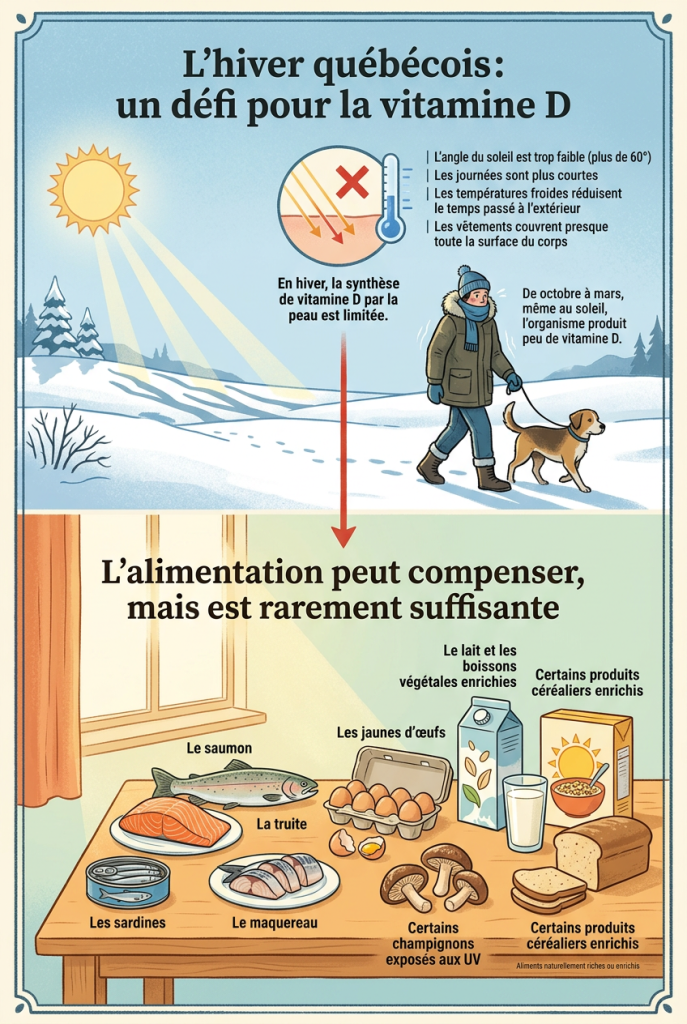
Unlike many regions of the world, Quebec receives insufficient ultraviolet B (UVB) radiation for much of the fall and winter to support optimal vitamin D production through the skin.
From October through March, several factors limit natural vitamin D synthesis:
- The sun sits too low in the sky.
- Days are shorter.
- Cold temperatures reduce time spent outdoors.
- Most of the skin is covered by winter clothing.
As a result, even on bright winter days, the body produces very little vitamin D.
Diet can help compensate, but it is often not enough on its own. Foods that naturally contain vitamin D include:
- Salmon
- Trout
- Sardines
- Mackerel
- Egg yolks
- UV-exposed mushrooms
Additional sources include fortified foods such as milk, plant-based beverages, and selected breakfast cereals.
Who Is Most at Risk of Vitamin D Deficiency?
Some individuals are more likely to develop inadequate vitamin D levels, including:
- Older adults
- People with darker skin pigmentation
- Individuals with limited sun exposure
- People living with obesity
- Individuals with chronic health conditions
- Those with intestinal malabsorption disorders
- People with limited mobility

Individuals living with neurological disorders such as stroke, multiple sclerosis, Parkinson's disease, spinal cord injury, or traumatic brain injury often face several of these risk factors simultaneously.
Neurological impairments may reduce:
- Time spent outdoors
- Sun exposure
- Participation in regular physical activity
- The ability to prepare balanced meals
- Adherence to nutritional and medical recommendations
For these individuals, maintaining adequate vitamin D levels becomes part of a broader strategy aimed at preserving mobility, bone health, and functional independence.
Vitamin D, Mobility, and Fall Prevention
Vitamin D contributes to muscle strength and neuromuscular performance. Deficiency may lead to muscle weakness, particularly in the proximal muscles of the hips and thighs, impaired balance, and an increased risk of falls.
Correcting a documented deficiency may help improve muscle function and modestly reduce fall risk, especially when combined with adequate calcium intake, strength training, and balance-focused rehabilitation.
However, it is important to maintain realistic expectations.
Vitamin D is not a miracle solution for mobility, nor is it a treatment for neurological disease.
Research in this area remains mixed:
- Studies examining strength and functional performance have produced variable results.
- Benefits appear to be greatest among people who are truly deficient.
- Supplementation cannot replace rehabilitation, exercise, or fall-prevention strategies.
- Large intermittent or annual doses are generally discouraged, as some studies have linked them to an increased risk of falls and fractures.
When a deficiency is present, restoring normal vitamin D levels may help support:
- Muscle strength
- Balance and stability
- Fall prevention
- Functional independence
- Rehabilitation outcomes
This becomes especially important during Quebec winters, when snow and ice create additional challenges for safe mobility.
Could Vitamin D Influence Neurological Health?
Researchers have been interested in the relationship between vitamin D and neurological disorders for many years. While several biological mechanisms appear plausible, much remains to be confirmed in human studies.
At present, the evidence largely reflects biological hypotheses and observational associations rather than proven cause-and-effect relationships.
1. Immune Regulation and Neuroinflammation
The brain, glial cells, and various immune cells contain vitamin D receptors. Some cells are even capable of converting vitamin D into its active form locally within the nervous system.
Vitamin D may help regulate immune activity by:
- Reducing certain pro-inflammatory immune responses
- Limiting the production of inflammatory cytokines
- Supporting regulatory immune cells
- Modulating antigen presentation
- Reducing activation of microglia and astrocytes
These effects have attracted particular interest in multiple sclerosis and other neuroimmune disorders.
2. Blood-Brain Barrier
Vitamin D may help maintain endothelial integrity and the blood-brain barrier. A deficiency could facilitate the adhesion and migration of activated lymphocytes into the central nervous system, a key mechanism involved in demyelinating diseases.
However, this hypothesis is currently supported primarily by experimental studies and animal models, and its clinical significance in humans remains incompletely established.
3. Oxidative Stress and Excitotoxicity
Vitamin D appears to play a role in the regulation of:
- Antioxidant defense systems;
- Free radical production;
- Intracellular calcium homeostasis;
- Cellular pathways involved in neuronal survival.
Disruptions in calcium regulation and excessive oxidative stress may increase the vulnerability of neurons and axons, particularly in neurodegenerative processes.
Excitotoxicity, a phenomenon characterized by excessive stimulation of neurons, is often associated with calcium imbalance and oxidative damage. Researchers have therefore hypothesized that vitamin D may contribute to maintaining a more favorable cellular environment for neuronal health. However, the precise clinical significance of these mechanisms in humans remains an active area of investigation.
4. Neural Plasticity and Myelin Repair
The nervous system has its own vitamin D metabolism. Experimental studies suggest that active vitamin D may influence neurotrophic factors and genes involved in cellular growth, neural survival, and myelin regulation.
While this provides a scientific rationale for ongoing research, it does not prove that vitamin D supplementation improves remyelination or reduces neurological disability.
5. Is Deficiency a Cause or a Consequence?
An important consideration is that low vitamin D levels may sometimes be a consequence rather than a cause of neurological disease.
Factors such as reduced mobility, institutionalization, aging, chronic inflammation, inadequate nutrition, and reduced sun exposure are common among people living with neurological disorders and may independently contribute to deficiency.
In reality, the relationship is likely bidirectional.
For now, correcting a documented deficiency is clearly beneficial for bone and muscle health, but vitamin D should not be considered an established neuroprotective therapy.
Supplementation: Beneficial but Individualized

When dietary intake and sun exposure are insufficient, vitamin D supplementation may be appropriate.
For many adults at increased risk of deficiency, maintenance doses in the range of 800 to 1,000 IU per day are commonly used. However, individual requirements vary depending on:
- Age
- Medical history
- Current medications
- Dietary intake
- Existing supplements
There is no one-size-fits-all approach. Supplementation should always be tailored to the individual’s needs.
Do You Need a Blood Test?
Routine blood testing is not necessary for everyone.
However, measurement of serum 25-hydroxyvitamin D may be considered in situations such as:
- Osteoporosis
- Recurrent fractures
- Frequent falls
- Chronic kidney disease
- Malabsorption disorders
- Suspected significant deficiency
- High-dose vitamin D therapy
- Complex clinical situations
A physician or healthcare professional can help determine whether testing is appropriate.
Be Careful with Multiple Sources of Vitamin D
One common mistake is unknowingly combining several sources of vitamin D.
These may include:
- Prescription vitamin D
- Over-the-counter vitamin D supplements
- Multivitamins
- Calcium supplements containing vitamin D
- Fortified foods
When several products are used simultaneously, excessive intake can occur unintentionally.
For this reason, it is important to discuss all supplements and medications with your healthcare team.
Can You Take Too Much Vitamin D?
Although deficiency is much more common than toxicity, vitamin D overdose can occur when excessive doses are taken over a prolonged period.
Excess vitamin D can lead to elevated calcium levels in the blood, a condition known as hypercalcemia.
Potential complications include:
- Severe dehydration
- Kidney impairment
- Kidney stones
- Chronic kidney damage
- Calcification of soft tissues and blood vessels
- Heart rhythm disturbances
In severe cases, significant neurological or cardiovascular complications may develop.
Warning Signs of Vitamin D Toxicity
Symptoms may include:
- Excessive fatigue
- Headaches
- Unusual muscle weakness
- Loss of appetite
- Nausea or vomiting
- Constipation
- Abdominal discomfort
- Excessive thirst
- Frequent urination
- Dehydration
- Bone pain
- Heart palpitations
- Confusion or unusual drowsiness

In individuals living with neurological disorders, symptoms of vitamin D toxicity may sometimes be mistaken for progression of the underlying condition.
Any new or unexplained change from a person's usual baseline should be taken seriously, including:
- Increased confusion or drowsiness
- Behavioral changes
- Reduced alertness
- Cognitive decline
- Worsening weakness
- Deterioration in walking or transfer abilities
- Loss of independence
- Markedly reduced food intake
- Persistent vomiting or constipation
Seizures, fainting episodes, or significant alterations in consciousness require urgent medical attention.
What Should You Do If You Suspect an Overdose?
If vitamin D toxicity is suspected:
- Stop taking vitamin D and calcium supplements.
- Verify the exact product and dosage being used.
- Seek prompt medical advice.
Depending on the circumstances, healthcare providers may assess:
- Blood calcium levels
- Kidney function
- Blood phosphorus levels
- Serum 25-hydroxyvitamin D
- Urinary calcium excretion
Severe confusion, dehydration, kidney failure, cardiac arrhythmias, seizures, or altered consciousness should always be treated as medical emergencies.
Key Takeaways
During Quebec’s long winter season, vitamin D deserves special attention. For individuals living with neurological conditions, maintaining adequate vitamin D levels may support muscle function, bone health, balance, and functional independence.
As is often the case in healthcare, the goal is balance. Preventing deficiency is important, but excessive supplementation can also be harmful. A healthy diet, appropriate supplementation when needed, and guidance from qualified healthcare professionals remain the safest and most effective ways to benefit from vitamin D throughout the year.
References
-
Demay MB, et al. Vitamin D for the Prevention of Disease: An Endocrine Society Clinical Practice Guideline. J Clin Endocrinol Metab. 2024;109(8):1907-1947. doi:10.1210/clinem/dgae290
-
Giustina A, et al. Consensus Statement on Vitamin D Status Assessment and Supplementation: Whys, Whens, and Hows. Endocr Rev. 2024;45(5):625-654. doi:10.1210/endrev/bnae011
-
LeBoff MS, et al. Supplemental Vitamin D and Incident Fractures in Midlife and Older Adults. N Engl J Med. 2022;387:299-309. doi:10.1056/NEJMoa2202106
-
Manson JE, et al. Vitamin D Supplements and Prevention of Cancer and Cardiovascular Disease. N Engl J Med. 2019;380:33-44. doi:10.1056/NEJMoa1809944
-
Bouillon R, et al. Health Effects of Vitamin D Supplementation: Lessons Learned From Randomized Controlled Trials and Mendelian Randomization Studies. J Bone Miner Res. 2023;38(10):1391-1403. doi:10.1002/jbmr.4888
-
Avenell A, et al. Vitamin D and disease prevention in adults: systematic review supporting the Endocrine Society guideline. J Clin Endocrinol Metab. 2024. doi:10.1210/clinem/dgae290
-
Malihi Z, et al. Long-term supplementation with 3200 to 4000 IU of vitamin D daily and adverse events. Eur J Nutr. 2023;62:1833-1844. doi:10.1007/s00394-023-03101-9
-
Zhang Y, et al. Vitamin D supplementation and mortality/cardiovascular outcomes: systematic review and meta-analysis of 80 randomized trials. Nutrients. 2023;15(8):1810. doi:10.3390/nu15081810
- Morin SN, et al. Clinical practice guideline for management of osteoporosis and fracture prevention in Canada: 2023 update. CMAJ. 2023;195(33):E1133-E1148. doi: 10.1503/cmaj.221647[2]
- Canadian Multiple Sclerosis Working Group / MS Society of Canada. Recommendations on vitamin D needs in multiple sclerosis from the MS Society of Canada. Int J MS Care. 2023.