

- 26 August 2026
- The Neuro-Concept Blog
Beyond Physical Activity: The Integration of Kinesiologists into the Ordre des ergothérapeutes Highlights the Little-Known Role of Kinesiology in Rehabilitation
By Dre Murielle Grangeon, PhD, Kin, Admin.A.
Imagine two 70-year-old individuals.
The first walks every day, does their own grocery shopping, climbs stairs without difficulty, and continues to participate actively in their community.
The second lives with the same medical diagnoses but struggles to move around, avoids going out, and relies more heavily on family members to accomplish certain daily activities.
In both cases, the question is no longer simply which diseases they have. The real question is this: to what extent are they able to function, participate in society, and remain independent?
This concept of human functioning is becoming one of the most important issues in our healthcare system.
It is also at the heart of the work kinesiologists perform every day.
The recent announcement that kinesiologists will be integrated into the Ordre des ergothérapeutes du Québec (OEQ) has sparked considerable debate. Many see it as an important step toward professional recognition. Others question the relationship between kinesiology and occupational therapy.
Yet behind this reform lies a much more interesting reality: it shines a spotlight on a lesser-known aspect of the profession.
For much of the public, kinesiologists are still associated with fitness training, exercise programs, or promoting healthy lifestyle habits. However, in healthcare, rehabilitation, and research settings, the profession has evolved significantly over the past several decades.
Today, kinesiologists contribute not only to disease prevention but also to maintaining, improving, and restoring functional abilities for individuals living with complex health conditions, physical limitations, and neurological disorders.
By selecting the Ordre des ergothérapeutes as the receiving professional order, the Quebec government implicitly recognizes this reality: kinesiology is no longer solely about physical activity. It now plays a full role in preserving independence, promoting social participation, and optimizing human functioning.
And in a Quebec facing an aging population, rising chronic disease rates, and growing rehabilitation needs, this distinction may carry far greater implications than it initially appears.
A Profession Often Wrongly Reduced to Exercise
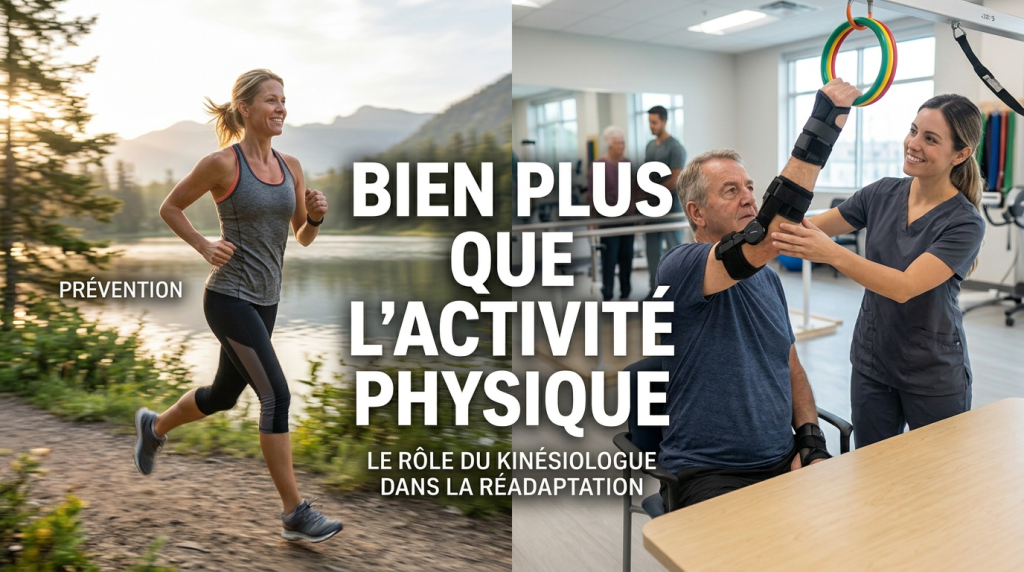
Every day, kinesiologists work with individuals experiencing temporary or permanent functional limitations. They are found in cardiovascular rehabilitation, oncology, geriatrics, mental health, musculoskeletal rehabilitation, and neurological care.
In these settings, the objective is not merely to increase physical activity levels. Rather, it is to maintain, improve, or restore the abilities necessary for independence, social participation, and quality of life. This distinction is critical.
From Exercise Prescription to Movement Science-Based Intervention
The evolution of kinesiology mirrors the advancement of scientific knowledge regarding human movement.
Historically, the profession developed around the improvement of physical fitness and performance. Today, advances in exercise physiology, biomechanics, neuroscience, and rehabilitation sciences have profoundly transformed our understanding of movement’s role in health.
Movement is no longer viewed solely as a preventive tool. It is increasingly recognized as a major determinant of human functioning.
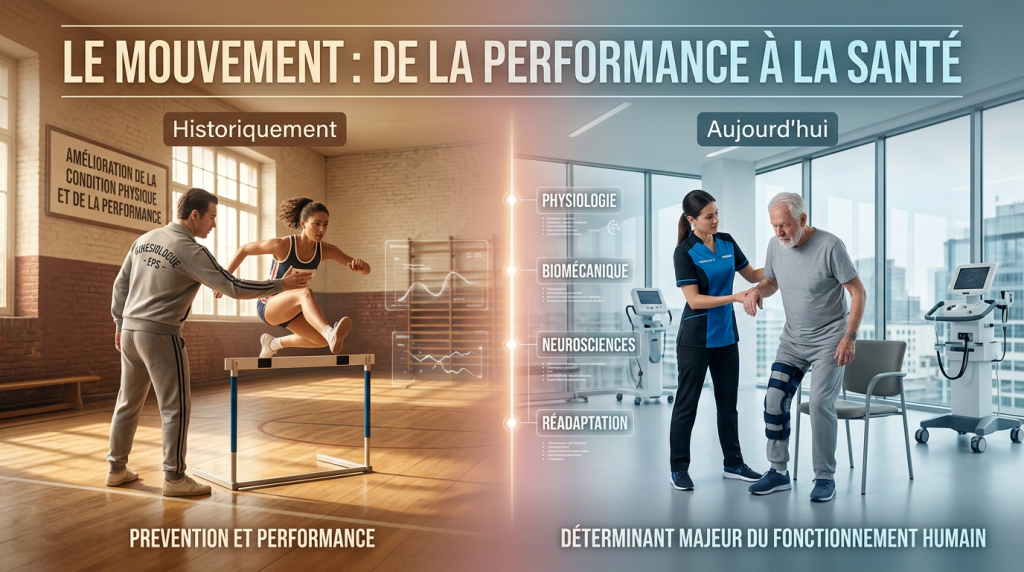
Research demonstrates that movement influences not only cardiovascular and muscular capacities but also neurological, cognitive, metabolic, and psychological functions. This broader perspective has significantly expanded the clinical role of kinesiologists.
As a result, when a kinesiologist works with someone recovering from a stroke, living with Parkinson’s disease, experiencing chronic pain, or recovering from cancer treatment, the objective extends far beyond improving physical fitness. The intervention is part of a clinical approach aimed at optimizing residual capacities, facilitating functional adaptation, and maximizing independence.
When Movement Becomes a Rehabilitation Tool
Rehabilitation is founded on a simple principle: helping individuals regain the highest possible level of independence and participation following illness, injury, or loss of function.
From this perspective, movement becomes a powerful therapeutic tool.
After a heart attack, stroke, cancer treatment, or orthopedic surgery, patient challenges frequently extend beyond the medical condition itself. They affect the ability to walk, work, climb stairs, perform daily tasks, and fully participate in social life.
A kinesiologist’s role includes assessing an individual’s physical and functional capacities, documenting limitations, and designing personalized interventions aimed at improving everyday functioning.
Functional capacity evaluations also occupy an important place in several areas of kinesiology, including rehabilitation, return-to-work programs, occupational health, and certain medico-legal contexts.
This is far more than simple exercise prescription.
It is a clinical expertise centered on optimizing human functioning.
An Expertise Particularly Relevant in Neurological Rehabilitation
The rapid growth of neuroscience has also transformed kinesiology practice.
Current knowledge of neuroplasticity demonstrates that the brain retains the ability to adapt and reorganize throughout life. This capacity can be stimulated through motor learning, repetitive functional practice, and exposure to movement-rich environments.
In this context, physical activity becomes much more than a method of improving fitness.
It becomes a tool for neurological recovery and adaptation.
An increasing number of kinesiologists work with individuals living with stroke, multiple sclerosis, Parkinson’s disease, traumatic brain injury, and various neurodegenerative conditions. They contribute to improving walking, balance, endurance, mobility, and the functional abilities necessary for social participation.
This reality is particularly evident in specialized rehabilitation centers where kinesiology interventions are becoming increasingly integrated into interdisciplinary care teams.
A Complementary Profession Rather Than a Competing One
Discussions surrounding the integration of kinesiologists into the Ordre des ergothérapeutes have sometimes created the impression that there is significant overlap or confusion among professions. Clinical reality, however, is much more nuanced.
Occupational therapists, physiotherapists, and kinesiologists often share a common goal: improving an individual’s functioning and participation in daily life.
However, each profession approaches this goal from a distinct perspective.
Occupational therapists primarily analyze the relationship between the individual, their occupations, and their environment.
Physiotherapists focus more on impairments, movement limitations, and the biomechanical mechanisms involved in functional recovery.
Kinesiologists contribute specialized expertise in evaluating physical capacities, adapting effort demands, functional reconditioning, and using movement as a therapeutic intervention.
These professions are not competing.
They are complementary.
In many clinical environments, this complementarity is one of the keys to successful rehabilitation outcomes.
Rehabilitation Technologies Are Also Transforming Practice
The growth of rehabilitation technologies is further reshaping the profession.
Robotic gait systems, functional electrical stimulation, motion analysis platforms, wearable sensors, immersive virtual reality, and artificial intelligence systems are now part of the clinical landscape in many specialized centers.
These innovations require professionals capable of understanding human movement, physiological adaptation to exercise, and the functional goals pursued during rehabilitation.
In many settings, kinesiologists occupy a strategic role in the clinical integration of these technologies, particularly because of their scientific expertise in movement and their ability to individualize intervention programs.
As rehabilitation becomes increasingly technology-driven, this expertise is likely to become even more valuable.
An Implicit Recognition of the Role of Kinesiologists in Rehabilitation
The government announcement is particularly noteworthy because it is not primarily based on promoting physical activity. Instead, the rationale centers on the close relationship between kinesiology practice and the maintenance and rehabilitation of functional abilities.
This justification reflects an important shift in the institutional understanding of the profession. It implicitly recognizes that kinesiologists are not solely movement experts for preventive purposes, but also healthcare professionals whose interventions directly contribute to human functioning, independence, and recovery.
In other words, the proposed integration appears to formally acknowledge a reality that many clinicians have observed for years.
An Aging Population Is Changing Quebec’s Needs
This evolution comes at a time when the needs of Quebec’s population are changing rapidly.
Population aging is accompanied by an increase in chronic diseases, functional limitations, and rehabilitation needs. Thanks to medical advances, Quebecers are living longer than ever before. However, they are also living longer with conditions that affect their level of functioning.
In parallel, a growing field of research is emerging through neurogeriatrics.
Preserving abilities is becoming almost as important as treating disease itself.

Can a person continue living independently at home?
Can they climb stairs?
Do their own grocery shopping?
Resume leisure activities?
Return to work?
These questions now occupy a central place in healthcare pathways and are also at the heart of the daily work performed by many kinesiologists.
The Challenges Ahead: Preserving the Profession’s Identity
Integration into the Ordre des ergothérapeutes undoubtedly represents an important advancement in public protection and professional recognition.
However, this transition also raises a significant challenge: preserving the unique identity of kinesiology.
The profession must continue to demonstrate what distinguishes it, namely its deep expertise in human movement, physiological adaptation to exercise, functional conditioning, and the therapeutic use of physical activity.
The challenge will not simply be obtaining professional regulation.
It will also be preserving the richness and uniqueness of a discipline that occupies a distinctive place within the healthcare ecosystem.
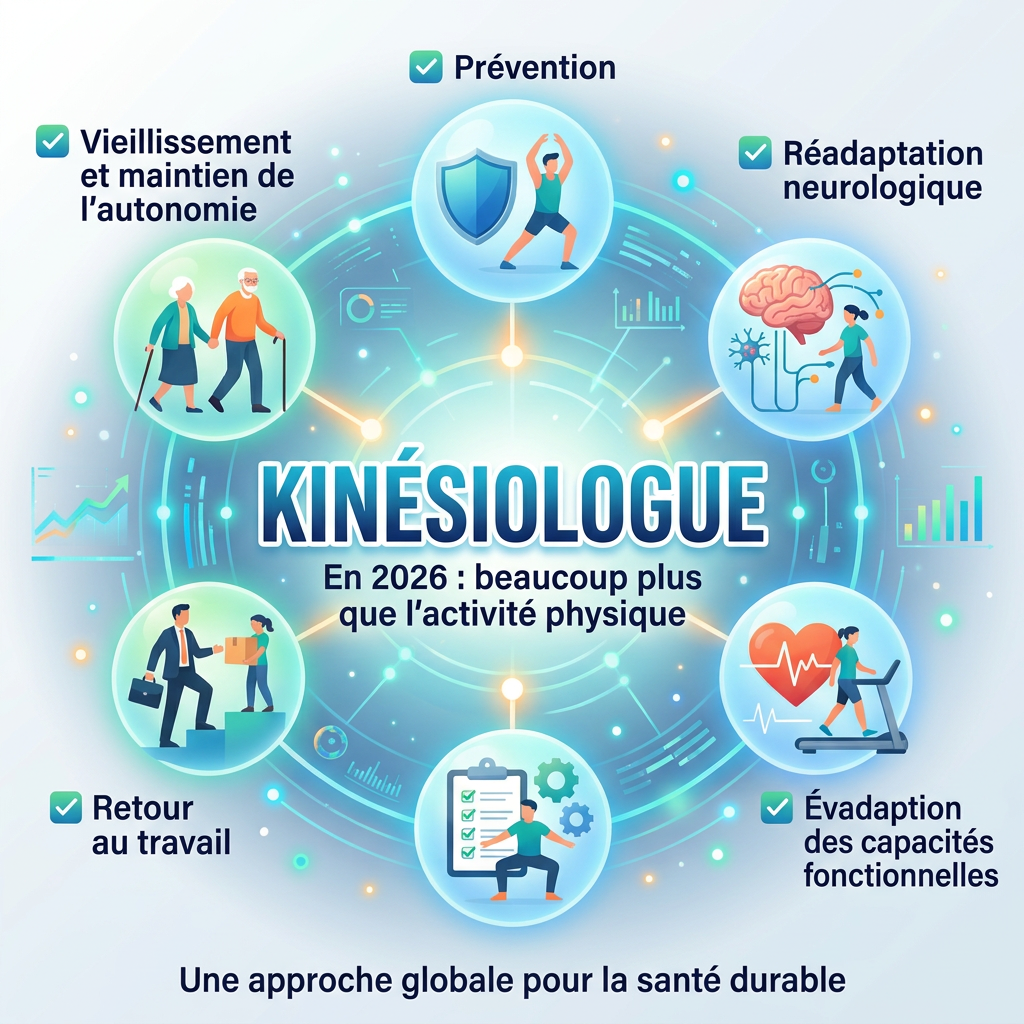
A Reform That Says More About the Future of Healthcare Than About One Profession
Ultimately, the real significance of this reform extends far beyond professional regulation.
The integration of kinesiologists into the Ordre des ergothérapeutes forces us to rethink how we define health itself.
For decades, our healthcare system has focused primarily on diagnosing and treating disease.
Today, another challenge is emerging: helping people continue to live, function, and participate despite those diseases.
In a context marked by population aging, increasing chronic disease prevalence, and shortages of rehabilitation resources, the true wealth of a society is no longer measured solely by years of life gained.
It is measured by years of independent living.
It is measured by a person’s ability to return to work after a stroke.
To continue playing with grandchildren despite Parkinson’s disease.
To remain at home despite age-related frailty.
To rebuild a meaningful life after injury or cancer.
This is precisely where kinesiologists make a difference every day.
Far beyond the stereotypes associated solely with fitness and exercise, they contribute to something much more fundamental:
the preservation of human functioning.
Perhaps the real story is not that kinesiologists are joining a professional order.
Perhaps the real story is that Quebec is finally beginning to recognize what they have been contributing for a very long time.
Because beyond physical activity, kinesiology has become a profession of rehabilitation, independence, and social participation.
And in tomorrow’s healthcare system, this expertise will not simply be relevant.
It will be essential.