

- 16 February 2026
- technologies, The Neuro-Concept Blog
🧠✨ The Use of Virtual Reality Headsets in Neurological Rehabilitation: A Revolution Already Underway
By Dre Murielle Grangeon, PhD, Kin, Admin.A.
🚀 Why Is Virtual Reality So Effective in Neurological Rehabilitation?
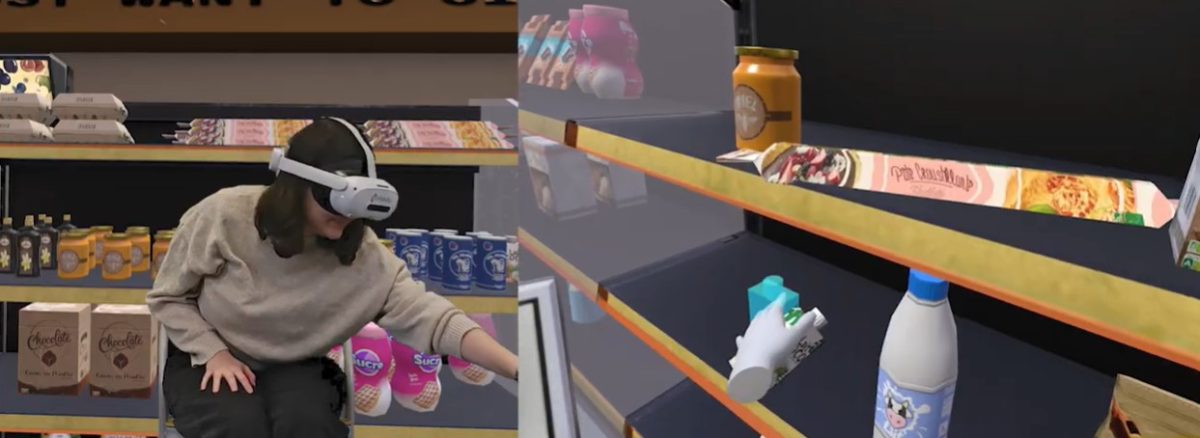
Neurological conditions—stroke, traumatic brain injury, multiple sclerosis, Parkinson’s disease, etc.—often lead to motor, sensory, and cognitive impairments that require intensive and repetitive rehabilitation. Virtual reality addresses these needs by offering interactive environments that allow:
● Highly motivating immersion that increases engagement
More than 92% of patients experience greater motivation when using VR during rehabilitation sessions.
● Multisensory stimulation that enhances neuroplasticity
VR simultaneously activates visual, auditory, and proprioceptive systems, creating ideal conditions for cortical reorganization, particularly after stroke. [currents.n…alcare.org]
● Intensive, repetitive, and task-specific training
Environments can be adapted to specific tasks such as walking, balance, grasping, coordination, and spatial exploration.
🧩 What Benefits Have Been Demonstrated by Research?
Recent scientific data confirms the effectiveness of VR headsets in neurological rehabilitation:
🔹 Improved Balance
A 2025 meta-analysis of 44 studies showed that VR significantly improves balance, with the strongest effect observed in individuals with Parkinson’s disease (SMD = 0.95). [link.springer.com]
🔹 Upper Limb Recovery After Stroke
According to a 2025 systematic review, VR systems—even non‑immersive ones—enhance upper limb function. Non‑immersive gaming systems such as Microsoft Kinect were found to be the most effective for upper limb motor recovery after stroke. [frontiersin.org]
🔹 Advances for Neurodegenerative Diseases
Studies published between 2020 and 2025 report improvements in:
- balance,
- gait,
- postural control,
- motor function,
- processing speed and executive function,
among patients with Parkinson’s disease or multiple sclerosis. [mdpi.com]
🔹 Promising Neurophysiological Mechanisms
VR leverages:
- the mirror neuron system (VR mirror therapy),
- multisensory stimulation facilitating cortical reorganization,
all key mechanisms for neurological recovery. [currents.n…alcare.org]

🎯 Practical Clinical Applications of VR Headsets
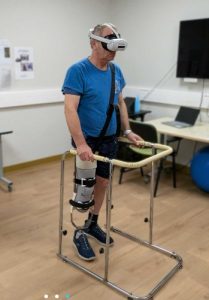
1. Balance and Gait Rehabilitation
Immersive environments allow patients to practice safe movements in varied scenarios (stairs, obstacles, uneven terrain).
2. Upper Limb Recovery
VR provides tasks involving grasping, bimanual coordination, and range of motion, with immediate feedback.
3. Cognitive-Motor Training
Exercises can integrate attention, memory, inhibition, and dual-tasking.
4. Pain Management
Nearly 85% of patients report reduced pain after VR sessions, partly due to immersive distraction effects.
5. Motivation and Adherence
Gamified environments reduce the monotony of rehabilitation. Many patients and clinicians describe VR as a genuine game changer for engagement and participation
🛠️ Limitations and Considerations
Despite its potential, VR in neurological rehabilitation is not a magic solution:
- Research remains heterogeneous, with small samples and short intervention durations in some studies. [mdpi.com]
- Immersive VR headsets are not always superior to non‑immersive systems for upper limb recovery after stroke. [frontiersin.org]
- Some patients may experience cybersickness, though this is relatively rare.
🔮 The Future of VR in Neurological Rehabilitation
Current trends show rapid expansion of VR in:
- outpatient clinics,
- long-term care centres,
- home-based telerehabilitation,
- intensive programs integrating artificial intelligence and biometric monitoring.
Smart platforms such as those from Neuro Rehab VR offer benefits not only to patients but also to clinicians (reduced administrative burden, enhanced data precision)
📝 Conclusion
Although certain challenges remain, the growing scientific evidence from recent years shows that VR is not only effective, but also poised to become a standard tool in rehabilitation programs.