

- 24 February 2026
- Rehabilitation explained, technologies, The Neuro-Concept Blog
Move Better and More: The Power of Technology
By Dre Murielle Grangeon, PhD, Kin, Admin.A.
In 2026, modern neurological rehabilitation relies on a fundamental duo:
- Neurological rehabilitation: treating impairments, reducing limitations, and optimizing neuroplasticity.
- Functional training: practicing real everyday tasks (walking, standing up, maintaining balance, using an arm).
Technologies — robotic systems, exoskeletons, virtual reality, biofeedback, brain stimulation, artificial intelligence — increase both the intensity and quality of functional training across major neurological conditions such as stroke, multiple sclerosis (MS), Parkinson’s disease, cerebral palsy (CP), and spinal cord injury (SCI).
Here is how each innovation supports real‑world function, backed by the latest scientific findings.
🦵 1. Robotic Gait Training: Amplifying Functional Training Across ALL Conditions
Robotic systems enable hundreds or thousands of gait cycles — a key ingredient for effective functional recovery.
✔️ Stroke
Robotics adds measurable benefits to conventional rehabilitation by improving balance, endurance, and gait parameters, especially in the subacute phase (0–12 weeks).
✔️ Multiple Sclerosis
Benefits are present but variable:
- Short‑term effects on speed, endurance, balance, and fatigue (536 participants).
- More lasting results with low‑intensity + progressive protocols.
✔️ Parkinson’s Disease
Results are heterogeneous:
- Some reviews report uncertain overall evidence.
- Others demonstrate improvements in balance, speed, step length, endurance, and motor scores.
Clinical impact varies based on severity and individual profile.
✔️ Cerebral Palsy
This is the condition where robotics shows the strongest evidence:
- Improved gait, motor control, and posture across more than 50 studies.
- Significant gains in motor function in trials (GMFM).
- Increased endurance (6‑minute walk test) and better GMFM D/E scores.
✔️ Spinal Cord Injury
Robotics supports gait in incomplete SCI:
- Improved speed, stability, and functional abilities across several meta‑analyses.
- (These results align with RAGT reviews including SCI populations.)
In complete SCI, robotics helps:
- prevent osteoporosis‑related fractures,
- reduce pressure injuries,
- decrease neuropathic pain,
- support overall health through upright posture and assisted mobility.
🦿 2. Intelligent Exoskeletons: Supporting or Replacing Human Effort (Activity‑Based Therapy)

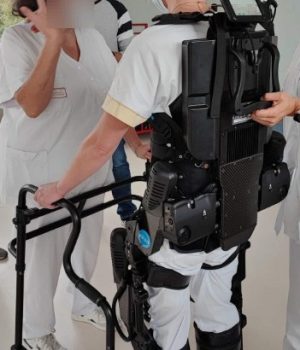
Exoskeletons detect movement intention and provide just enough assistance to promote active participation — the cornerstone of functional training.
✔️ Stroke
They allow safer, more consistent stepping practice, posture control, and endurance work — with outcomes similar to robotic gait platforms.
✔️ Multiple Sclerosis
Few trials exist, but grounded exoskeletons show short‑term improvements in speed and balance when integrated into functional training.
✔️ Parkinson’s Disease
Exoskeletons are currently being evaluated in multiple 2024–2025 trials for:
- safety,
- fall prevention,
- mobility impact.
✔️ Cerebral Palsy
A 2024 JAMA trial demonstrated that an assist‑as‑needed exoskeleton improves motor function and balance more than therapy alone.
✔️ Spinal Cord Injury
Exoskeletons are among the most widely used devices:
- Incomplete SCI: improvements in speed, stability, and balance (supported by multiple SCI meta‑analyses).
- Complete SCI: strong psychological benefits, better posture, improved general health, better assisted mobility, and higher quality of life — extremely valuable in daily living.
🧲 3. Non‑Invasive Brain Stimulation: Boosting the Effect of Functional Training
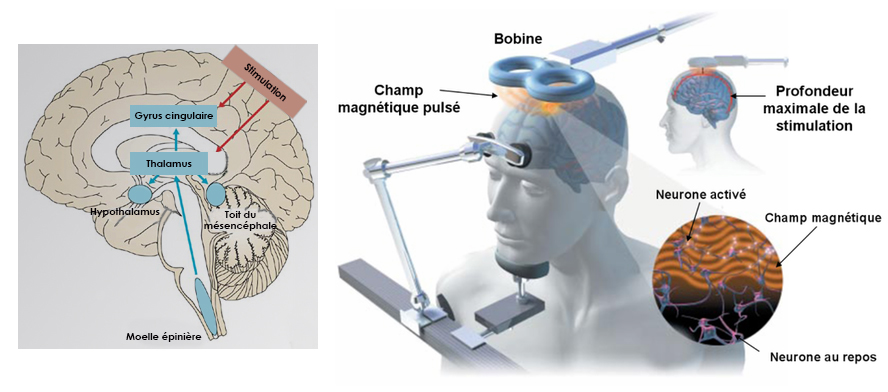
rTMS and tDCS “prime” the brain to improve motor learning.
✔️ Stroke
rTMS can improve daily activities and motor function, especially when followed immediately by functional training.
✔️ MS / Parkinson’s / CP / SCI
Evidence is more limited, but these approaches are investigated to improve motor control, balance, or cognition.
Their effectiveness strongly depends on:
- stimulation target,
- dosage,
- timing relative to functional training.
👟 4. Artificial Intelligence: Understanding What to Train and Measuring Progress
AI provides detailed analysis of:
- balance,
- symmetry,
- step length,
- compensatory strategies.
Across all conditions (stroke, MS, Parkinson’s, CP, SCI), AI helps clinicians precisely target what needs to be trained — for example:
- increasing weight‑bearing on the affected side,
- reducing circumduction,
- improving coordination.
Recent AI systems are explainable, facilitating clinical use, but more real‑world validation is still needed.
🎮 5. Virtual Reality & Biofeedback: Making Functional Training More Engaging
VR immerses the user in real‑life scenarios:
- walking down a street,
- avoiding obstacles,
- balancing on virtual platforms.
Biofeedback provides immediate information on performance (weight‑bearing, speed, symmetry).
✔️ Stroke
VR improves balance and upper‑limb function when added to traditional therapy.
✔️ Multiple Sclerosis
VR clearly improves balance and sometimes reduces fatigue.
Some studies also report small cognitive gains.
✔️ Parkinson’s Disease
A mega‑analysis (2,095 participants) shows VR is the most effective technological intervention for:
- improving balance,
- reducing TUG time,
- enhancing quality of life.
✔️ Cerebral Palsy
Often paired with robotics, VR boosts motivation and motor learning.
Positive outcomes are well‑documented in several CP reviews.
✔️ Spinal Cord Injury
VR helps train sitting/standing balance, trunk stabilization, and postural control — with encouraging results consistent with SCI research.
🟩 CONCLUSION
In 2026, neurological rehabilitation and functional training are no longer “just exercises.”
Technologies enhance conventional rehabilitation — they do not replace it.
They are most effective when used at the right time, at the right dose, and for a specific objective.
- Stroke: robotics + conventional rehab = better motor recovery.
- MS: robotics is useful (especially when progressive and well‑dosed), VR is highly effective for balance.
- Parkinson’s: robotics is promising but inconsistent; VR leads for balance and mobility.
- Cerebral palsy: robotics strongly improves function, gait, and neuroplasticity.
- Spinal cord injury: robotics helps maintain health in complete injuries; combined therapy yields best outcomes in incomplete injuries.
The core principle of modern rehabilitation:
It’s not just the therapy that matters — it’s the intensity, repetition, and relevance of functional training.
Technology enables:
- more repetitions,
- training of real‑world functions,
- increased motivation,
- precise progress measurement,
- optimized brain readiness.
What transforms people’s lives is not the machine —
but what they accomplish with the machine.
Across all major neurological conditions — stroke, MS, Parkinson’s disease, cerebral palsy, and spinal cord injuries — modern technologies enhance recovery, improve rehabilitation outcomes, and strengthen the relevance of functional training.
The question is not:
➡️ “Which device is the best?”
The real question is:
➡️ “Which tool helps this person train more, better, more precisely, and with motivation?”
And that is how technology reshapes recovery pathways and the everyday practice of physical therapists, occupational therapists, kinesiologists, and rehabilitation professionals.